
Cabinet refinishing contractors repair minor surface imperfections by cleaning, sanding, filling small dents or scratches, and smoothing uneven areas before applying primer and finish. This careful preparation helps create a clean, even surface.
Introduction
Minor scratches, dents, chips, and small surface flaws can make otherwise beautiful cabinets look worn and outdated. Fortunately, cabinet refinishing contractors have effective techniques for repairing these imperfections before applying a fresh finish. Rather than replacing the entire cabinet, professionals carefully inspect the surface, clean it, fill damaged areas, sand rough spots, and prepare the material for a smooth, even coating. As a result, refinished cabinets can achieve a polished appearance while preserving the existing structure. Understanding how contractors handle these minor imperfections can help homeowners appreciate the value of professional refinishing and make informed decisions when updating their kitchen or bathroom cabinets.
1. Start With a Careful Cabinet Surface Inspection
Before making any repairs, Cabinet refinishing contractors inspect the entire cabinet surface. They look closely at doors, drawer fronts, cabinet boxes, edges, corners, and areas around handles. This inspection helps them determine whether the problem is simply cosmetic or whether it indicates more serious damage. Small scratches, paint chips, minor dents, worn finish, and loose hardware are common examples of issues that may be addressed during a refinishing project.
This step is important because not every imperfection requires the same solution. A shallow scratch may only need light sanding and touch-up coating, while a dent might require wood filler before sanding. Likewise, peeling material or swelling caused by moisture can require more extensive attention. Experienced Cabinet refinishing experts evaluate the condition first so they can choose an appropriate repair method instead of simply covering the problem with another coat of finish.
2. Clean the Surface Before Making Repairs
Once professionals understand the condition of the cabinets, they thoroughly clean the surfaces. Kitchen cabinets naturally collect grease, food residue, dust, fingerprints, and cleaning-product buildup. If these contaminants remain on the surface, fillers, primers, or coatings may not adhere properly. Therefore, cleaning is one of the most important preparation steps in Professional cabinet refinishing.
After cleaning, the cabinets are allowed to dry before additional preparation begins. Professionals may then inspect the surface again because dirt and residue can sometimes hide small scratches or imperfections. This detailed approach helps ensure that repairs address the actual condition of the cabinet rather than simply hiding surface problems temporarily. Proper preparation and controlled application are central parts of a quality refinishing process.
3. Smooth Out Scratches and Worn Areas
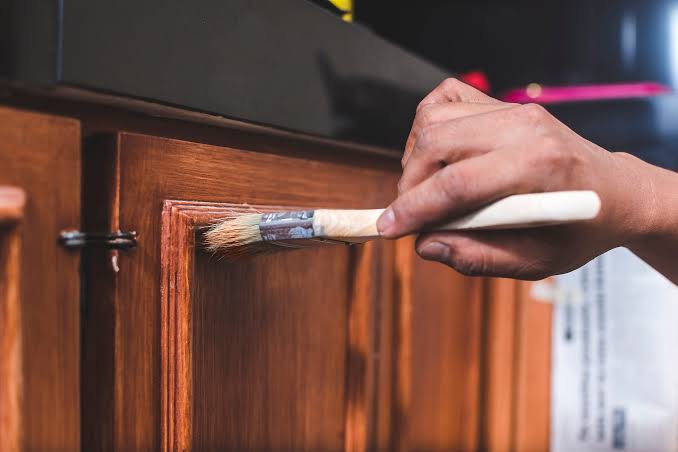
Light scratches are among the most common imperfections found on frequently used cabinets. They often appear around handles, edges, drawer fronts, and other high-contact areas. Depending on the depth and cabinet material, professionals may lightly sand the damaged area to remove rough edges and create a smoother surface for the new finish.
For stained wood cabinets, the repair approach can involve matching the existing stain and carefully working with the direction of the wood grain. For painted cabinets, a color-matched coating can help blend the repaired area with the surrounding finish. Minor scratches can sometimes be handled with touch-up products, while deeper scratches may require more extensive refinishing.
The goal is not simply to cover the scratch. Instead, professionals try to make the repaired area visually blend with the surrounding cabinet. That distinction matters because applying excessive paint or finish over an uneven surface can actually make the imperfection more noticeable.
4. Repair Small Chips and Flaking Finish
Cabinet edges and corners often experience repeated contact, making them especially vulnerable to chipped paint or finish. A small chip might seem insignificant, but exposed material can become more noticeable and may eventually contribute to additional finish deterioration. Cabinet refinishing services can address these areas by carefully removing loose material and preparing the exposed surface.
Professionals generally smooth the damaged edges before applying an appropriate repair material or coating. Thin, controlled layers are often preferable to heavy applications because they allow the repaired area to blend more naturally. Touch-up guidance similarly recommends cleaning, lightly sanding rough edges, using color-matched material, and allowing sufficient drying time between applications.
Color matching also plays a major role. Even a small difference in color or sheen can repair stand out under kitchen lighting. A skilled Cabinet refinishing company therefore considers the existing color, finish, texture, and surrounding surfaces when completing the repair.
5. Fill and Sand Minor Dents for a Smooth Finish
Small dents can occur when cabinet doors are bumped by cookware, appliances, or other household items. Although a shallow dent may not affect cabinet function, it can become highly visible after a new finish is applied. Rather than simply painting over it, professionals can prepare the damaged area so the final surface remains smooth.
For suitable wood surfaces, a compatible filler may be applied to the dent. After the material dries, the area can be carefully sanded until it becomes level with the surrounding surface. This process requires patience because excessive sanding can create a depression or expose additional material. Guidance for minor cabinet dents similarly identifies cleaning, filling when necessary, light sanding, and touch-up coating as common repair steps.
Once the repair is properly leveled, the area can move through the normal refinishing process. The result should look like a continuous cabinet surface rather than a visible patch. This is one reason professional preparation often produces better results than quickly brushing paint over a dent.
6. Address Hardware and Alignment Problems
Surface imperfections are not always limited to scratches and paint damage. Loose hinges, misaligned doors, and worn hardware can also affect the overall appearance of a refinished kitchen. A cabinet door that sits unevenly can make an otherwise beautiful finish look unfinished. Consequently, Cabinet refinishing experts often inspect hardware as part of the broader project.
Loose screws may need tightening, while stripped mounting points may require an appropriate repair. Concealed hinges can also allow adjustments for door height, depth, and side-to-side positioning. Minor alignment problems are often associated with repeated use, loose hardware, humidity changes, or normal home movement.
Addressing these details before the final inspection helps create a more polished result. After all, refinishing is about more than changing cabinet color. It is about improving the overall appearance and usability of the existing cabinetry.
7. Prepare the Cabinet for a Professional New Finish
After minor imperfections have been repaired, professionals prepare the entire surface for refinishing. This may involve additional sanding to create a suitable surface for primer or coating. The objective is to create consistent adhesion while avoiding unnecessary damage to the existing cabinet material.
A professional process also pays attention to surrounding areas. Floors, countertops, appliances, walls, and other nearby surfaces may need protection during the project. Controlled application techniques can help reduce problems such as drips, streaks, uneven texture, and inconsistent coverage. Professional refinishing providers emphasize that careful preparation and controlled coating application are essential to producing smooth and durable results.
This preparation stage is where the difference between a quick paint job and Professional cabinet refinishing becomes especially clear. A quality result depends heavily on what happens before the final coating is applied.
8. Know When Minor Damage Needs More Than Refinishing
Not every cabinet imperfection qualifies as a simple surface repair. Professionals know when a problem has moved beyond cosmetic damage. Large cracks, severe warping, water-related swelling, significant delamination, or damaged hinge mounting areas can indicate deeper issues that may require specialized repair or replacement of individual components.
This evaluation protects homeowners from investing in a finish that will not solve the underlying problem. For example, covering moisture-damaged material without addressing the source can lead to recurring deterioration. A reputable Cabinet restoration services provider should explain what can realistically be repaired, what can be refinished, and when replacement of a damaged component makes more sense.
Being honest about the cabinet’s condition is part of professional service. A good contractor focuses on a durable result rather than simply making the cabinets look better for a short time.
9. Why Professional Refinishing Can Be Better Than DIY Touch-Ups
DIY touch-ups can work for extremely small imperfections, especially when you already have the correct matching materials. However, larger refinishing projects require more than a small brush and a can of paint. Professionals understand surface preparation, material compatibility, color matching, sanding techniques, application methods, drying conditions, and final inspection.
That expertise can be particularly valuable when several types of imperfections appear together. A kitchen may have scratches on the doors, chips along the edges, dents on drawer fronts, and worn finish around the handles. Rather than treating each problem separately, a Cabinet refinishing company can create a coordinated repair and refinishing plan. This approach helps achieve a more uniform appearance across the entire kitchen.
Professional refinishing can also help preserve existing cabinetry. Instead of automatically replacing structurally sound cabinets because their surfaces look worn, homeowners can explore refinishing as a way to refresh their appearance while retaining the existing cabinet framework.
10. Keep Your Refinished Cabinets Looking Their Best
Once the refinishing project is complete, maintenance becomes the homeowner’s responsibility. Fortunately, basic habits can help protect the new finish. Clean spills promptly, avoid abrasive cleaning products and tools, use gentle cloths, and avoid repeatedly slamming cabinet doors. Periodically checking hinges and hardware can also help prevent alignment problems from developing.
Pay special attention to high-use areas such as handles, drawer edges, and cabinet corners. These areas naturally experience more contact and may show wear sooner than other surfaces. Regular inspections can help you identify small problems before they become more noticeable. Preventive maintenance recommendations include cleaning regularly, tightening hardware, avoiding abrasive tools, and maintaining appropriate humidity levels.
Choosing an experienced contractor can make the repair and refinishing process more predictable, especially when your cabinets need more than a basic touch-up.
Conclusion
Minor surface imperfections can make otherwise beautiful cabinets look worn or outdated, but professional cabinet refinishing contractors know how to restore them effectively. From filling small dents and scratches to smoothing uneven areas and preparing surfaces for a fresh finish, these careful repairs help create a clean, polished appearance. With the right techniques, materials, and attention to detail, refinishing can give your cabinets a renewed look without the expense of complete replacement. If you want dependable craftsmanship and quality results for your next home improvement project, consider All Pro Improvings for professional assistance. Their expertise can help turn tired cabinets into a refreshed and attractive part of your home.
FAQs
Q: Can cabinet refinishing contractors repair scratches?
A: Yes. Many light scratches can be repaired through cleaning, careful sanding, color matching, and touch-up coating. Deeper scratches may require more extensive preparation or refinishing.
Q: Can small dents be repaired before cabinet refinishing?
A: In many cases, yes. Professionals can clean the area, apply an appropriate filler when needed, sand the repair smooth, and prepare it for the new finish. Larger or structurally significant dents may require additional repair.
Q: Is cabinet refinishing the same as painting cabinets?
A: Not exactly. Cabinet refinishing generally involves preparing and restoring existing cabinet surfaces before applying a new finish. Painting may be one part of that process, but professional refinishing typically places greater emphasis on preparation, repair, adhesion, and finish quality.
Q: How do professionals repair chipped cabinet paint?
A: They typically clean the area, remove or smooth loose material, lightly sand rough edges, and apply compatible color-matched coating in controlled layers. The repair is then blended with the surrounding finish where appropriate.
Q: Can refinishing fix water-damaged cabinets?
A: It depends on the severity. Minor surface effects may sometimes be addressed, but swelling, significant deterioration, or structural damage may require replacement or specialized restoration. Covering serious water damage without fixing the underlying issue is not a reliable solution.
Q: When should I hire cabinet refinishing experts?
A: Consider professional assistance when imperfections are widespread, color matching is difficult, the existing finish is heavily worn, or repairs involve dents, peeling, or damaged surfaces. Professionals can also determine whether refinishing is appropriate for your cabinet material.
Q: How can I prevent new cabinet imperfections?
A: Use gentle cleaning methods, avoid abrasive tools, tighten loose hardware, avoid slamming doors, and address chips or scratches early. Preventive care can reduce repeated repairs and help preserve the cabinet finish.